The Creative Logic an AI Agent Uses to Structure a Video You Would Have Structured Differently
Automated edits follow signals, not intent, so creators should direct structure.
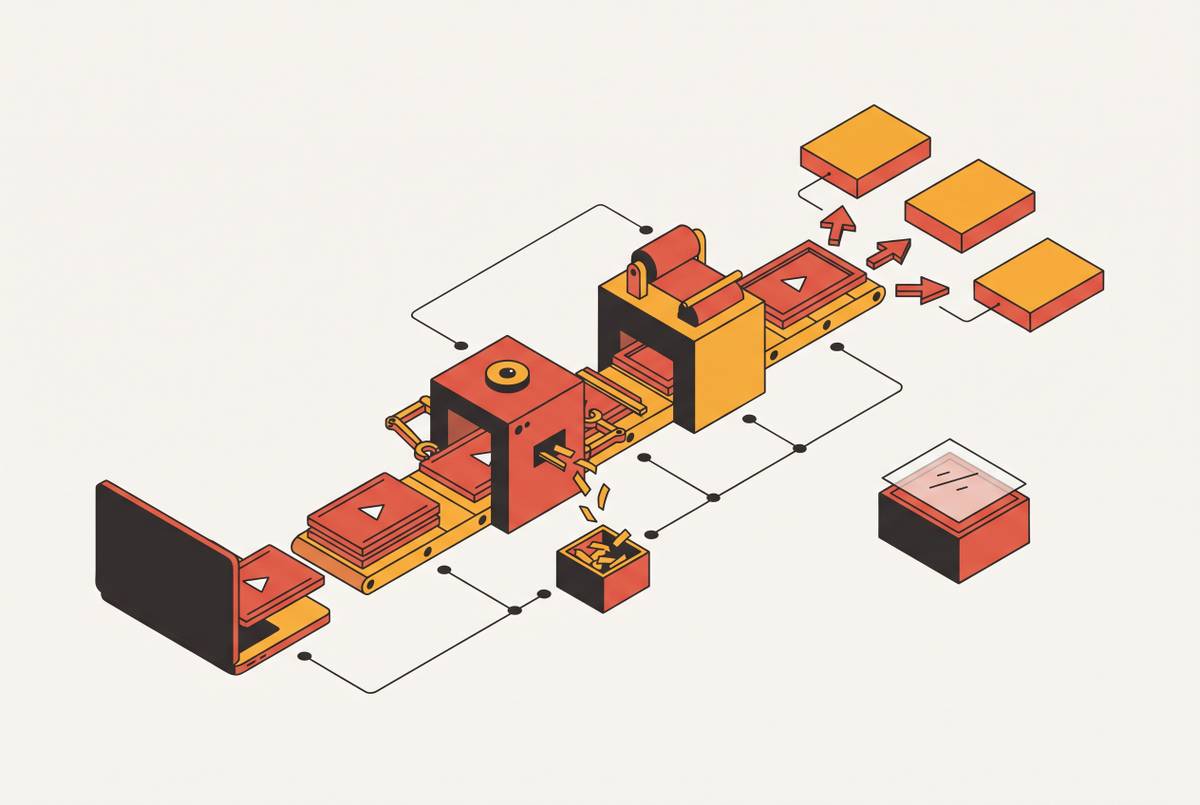
Agentic video editing uses AI to choose footage, order scenes, and make cuts based on a hierarchy of signals it can observe, while a human editor works from a feel for the story. That explains why an automated edit can look polished yet tell the wrong story. The strongest workflow gives the agent the mechanical work while the creator directs the structure, pacing, and intended effect.
What it means for an AI agent to "structure" a video
Structuring a video means deciding what belongs, what comes first, and how the pieces become a finished argument or story. An agent parses an instruction, selects and sequences material, and assembles a deliverable through successive decisions. Sequencing is itself creative work.
Agentic Artifact Creation: Systems, Evaluation, Principles, and Opportunities describes this as a construction loop. The system maintains a working representation of the deliverable, applies a construction policy, and uses feedback during execution to redirect later actions. Put simply, it builds, evaluates, and adjusts. But the representation it works from determines which judgments it can make.
Bertelsmann AI Hub’s Unified Agentic Video Editing Across Levels of Complexity and Creativity demonstrates an approach built on structured textual metadata. Transcript text, shot boundaries, silence, pacing intervals, and scene labels give the agent material it can reason over without reading the footage as a person would. Those signals are useful, but they are not intent. The system can see how long a pause lasts, while the reason the creator paused may stay hidden.
The signal hierarchy an AI agent actually follows when making cuts
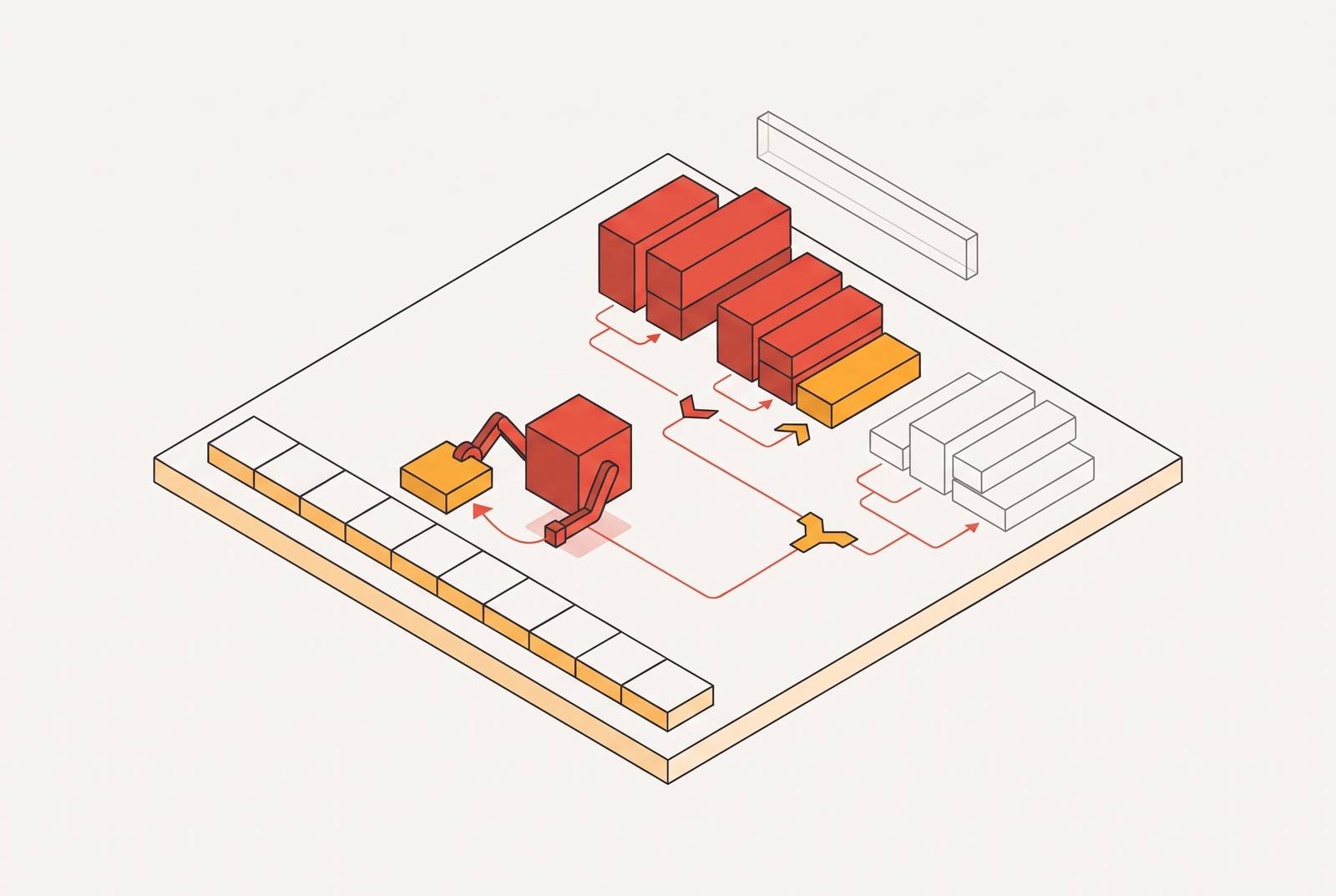
The first layer is mechanical, including silence gaps, filler words, and sentence boundaries. These offer relatively clear places to cut, so rough cuts and first-pass captions can be automated early. When a sentence ends, the agent has a possible place to cut. The system does not need to understand the whole argument to identify that boundary.
The next layer assigns semantic weight to the transcript. Keyword density, changes in topic, and terms that come up again help the agent find passages it treats as important. Above that are structural templates based on engagement formulas, which give the chosen content an arc. A hook followed by proof, steps, and a call to action supplies a ready-made shape when the footage itself has not supplied an explicit plan.
The Bertelsmann research makes that structural pass unusually concrete. For preview generation, its agent assigned scenes the roles of setup, development, escalation, climax, resolution, breather, or transition before applying editorial constraints. A scene becomes a “breather” the system can place, rather than a moment whose emotional purpose it must discover from scratch.
For summaries and trailers, the same research allows more complexity and creative freedom, but dense hierarchical textual metadata remains the agent’s lens. The freedom operates inside that representation. Because lower-order decisions come first, later choices about structure work with what those passes leave in place.
How a human editor reads the same footage differently
A human editor starts from the effect the video should have on a specific audience. Which moment contains the emotional or argumentative core, and what must come before it for that moment to land. The footage is raw material for that answer. Its recorded order does not have to become the finished story’s order.
The editor holds an intended whole in mind while judging the parts, whereas the agent’s hierarchy resolves parts and assembles a whole from them. Neither description makes every individual choice correct. An audience need or a signal the system can classify gives a choice its purpose.
Pacing makes the distinction easy to hear. A sentence boundary is a convenient cut point, but it does not establish whether the viewer needs a cognitive or visual break. A human may keep a pause because the idea just before it needs time to settle. The agent may see removable silence, which is rather like clearing the plates while someone is still chewing.
Style adds another layer of intended effect. The agent’s structural model may have no way to account for lower-third timing, the micro-rhythm of sound and captions, or brand-specific motion. In the Bertelsmann research, the less constrained prompt produced marginally more clickable previews while spoiling the story, so increased clickability did not mean the preview had done its intended job.
Where the structural gap between agent and human output shows up in practice
For a startup founder or SaaS marketer, the most recognizable mismatch is often a video that follows the recording perfectly and explains the product poorly. A task recording has a chronological order. A prospective user has a learning curve and a decision to make. Following the first may do little to help the second, yet an automated walkthrough tends to keep the recorded order even when the viewer needs a different structure.
Template imposition creates a different kind of mismatch. The edit may force the material into a hook, proof, steps, and call to action even when the audience needs another route through it. Every part can look professionally packaged. The package can undermine the argument even when individual cuts work, and polishing captions will leave that underlying argument unchanged.
Dialogue makes local accuracy especially misleading. When speakers interact or a story depends on ambiguity, transcript-driven cuts can be clean in isolation but incoherent across the conversation. Failures to tell who is speaking, known as diarization failures, are one sign of this. Missing contextual B-roll is another, because relevant words alone do not establish which image will help the viewer understand the exchange.
VideoAgent: All-in-One Framework for Video Understanding and Editing identifies limited long-video understanding and planning as a critical weakness of existing automated systems, together with difficulty handling diverse comprehension and editing operations. That helps explain why a competent short segment is not proof of a coherent extended narrative. For the creator reviewing an edit, the revealing question is not only whether each cut works, but whether the next section follows for the right reason.
How much can an AI video editor decide about cuts and pacing on its own?
Multi-agent orchestration gives an automated editor more ways to handle that complexity. Instead of expecting one agent to perform every operation, it distributes work among specialists and coordinates their output. More work can move off the manual timeline. But distributing a decision does not automatically supply the judgment behind it.
The VideoAgent framework integrates over thirty specialized editing agents, covering operations such as audio extraction, rhythm detection, dialogue, and narrative structuring. An intent parsing layer selects relevant tools, while a textual-gradient graph assembles complex pipelines. The paper reports orchestration success rates of 87–95%. The percentage of videos that satisfy a creator’s unstated creative intent remains unmeasured by those figures.
An intent parser still cannot reliably turn “make it feel urgent” or “this section needs to breathe” into the exact effect the creator has in mind. Such language leaves the editorial target underdefined. Adding specialists can help the agent carry out the work without settling what kind of urgency the audience should feel.
The artifact creation survey describes the architectural tradeoff behind this arrangement. Decomposition reduces local complexity while increasing coordination and reassembly costs, leaving more seams for human review. When a learned judge shares the generator’s tastes or blind spots, its score adds little evidence from a separate point of view, rather like asking the chef’s twin to judge the soup.
Why creators who understand the agent's logic get better output than those who fight it
Responsibility should be assigned by layer, with each layer evaluated separately. For creators editing videos with AI, that means trusting the mechanical first pass and directing the structural one. Rough selects, silence removal, first-pass captions, and format resizing are useful places to let automation work. Going back over every mechanical decision by hand takes time for little gain.
An engagement template is a default the creator can freely revise, replacing its arc or reordering sections while retaining the automated groundwork. For a SaaS walkthrough, that means judging the order by how the viewer learns and makes a decision rather than treating the order of the recording as sacred.
To make that review concrete, focus intervention on the places where a measurable signal can misread a human purpose. Pacing at an emotional beat may need more room than sentence-boundary cutting provides. B-roll should support contextual meaning, with keyword matches judged by how well they serve that purpose. Hook timing should suit the specific audience, with any generic engagement formula adjusted accordingly.
The Bertelsmann experiment gives this division of labor a useful basis. Its editorial constraints protected structure and spoiler avoidance, even though removing them improved clickability votes. Those constraints should be stated upfront, including the outcomes the agent must not sacrifice for an easier-to-measure gain. “More clickable” is not a complete brief when the preview must also leave the story worth watching.
For a non-editor on a startup or SaaS team, this makes the hybrid workflow manageable. The agent handles mechanical preparation, while the human reviews the structural seams and redirects the intended effect. That is a route to professional-quality content without requiring a dedicated editor. It also gives a clearer criterion for judging an autonomous editor than the vague promise that it “does everything,” namely which decisions it can own and which still need direction.
How feedback loops and cross-project learning are beginning to close the structural gap
Generic engagement templates stand in for knowledge of a given audience, so feedback on how a video performs can change how the agent makes choices about structure. When an agent learns from a channel’s or organization’s own watch-time and drop-off data, its defaults can become calibrated to that audience. The template is no longer just a borrowed suit.
Cross-project learning extends that possibility beyond the current video. An agent learning from cumulative organizational history could supplement a brief with evidence of patterns in brand voice and audience expectation. That would give later decisions a more specific foundation. It would not, however, turn observed audience behavior into a complete statement of what the organization wants to achieve.
The VideoAgent framework points toward supporting infrastructure through shot planning and cross-modal retrieval over extensive material libraries within an editing task. That provides a foundation for working across large collections, while the ability of cross-project learning to solve creative judgment remains unproven. The distinction is important when assessing the direction of the technology. Access to more relevant material and learning what to do with it are related, but separate, capabilities.
The artifact creation survey describes principles that make these loops more inspectable. Commitments and responsibility stay explicit, feedback becomes targeted repair, and affected state is revalidated after a change. Applied to video, the aim is a construction process that supports faster revision and judges changes against a declared purpose, with automated score increases assessed against that purpose.
Understanding which signals drive an edit helps identify what feedback should correct and what a performance metric should not overrule. Better loops can teach the agent how an audience responds. The creator still sets the target the loop learns toward.
Sources
- VideoAgent: All-in-One Framework for Video Understanding and Editing
- Agentic Artifact Creation: Systems, Evaluation, Principles, and Opportunities
- Unified Agentic Video Editing Across Levels of Complexity and Creativity
- [2609.12769] Unified Agentic Video Editing Across Levels of Complexity and Creativity
- Unified Agentic Video Editing Across Levels of Complexity and Creativity