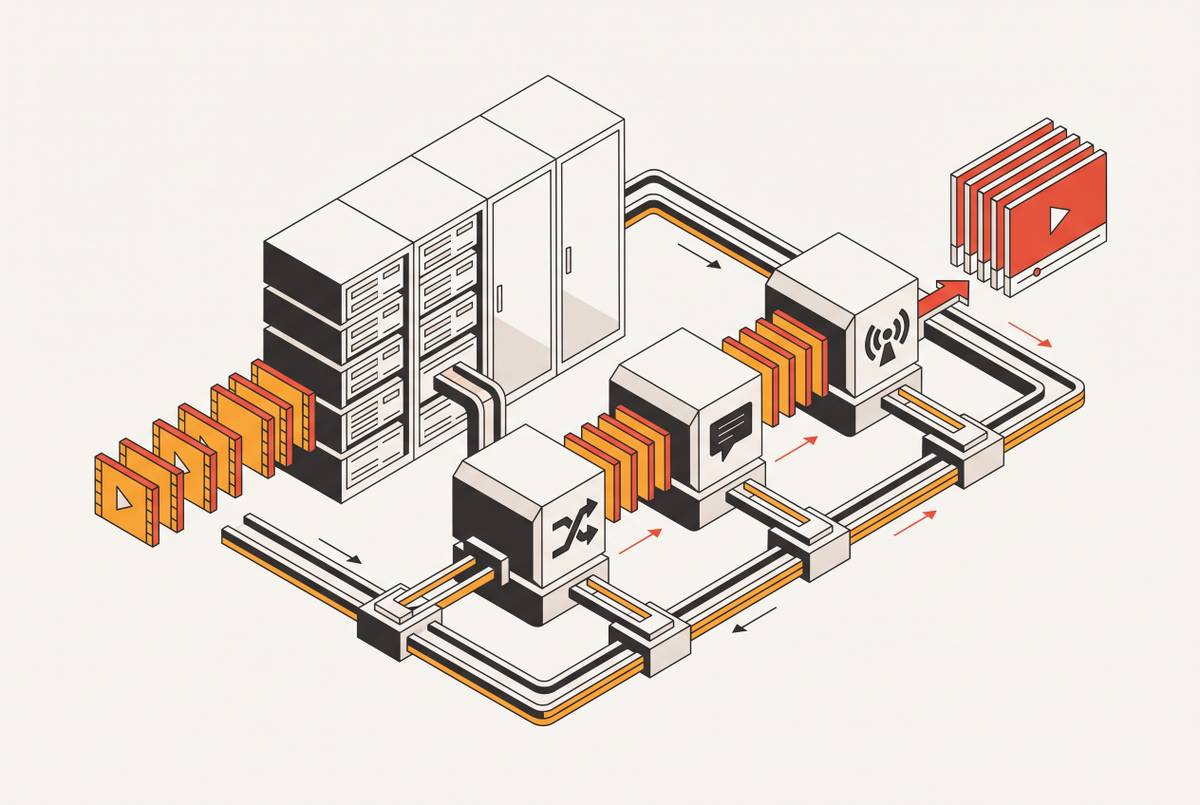
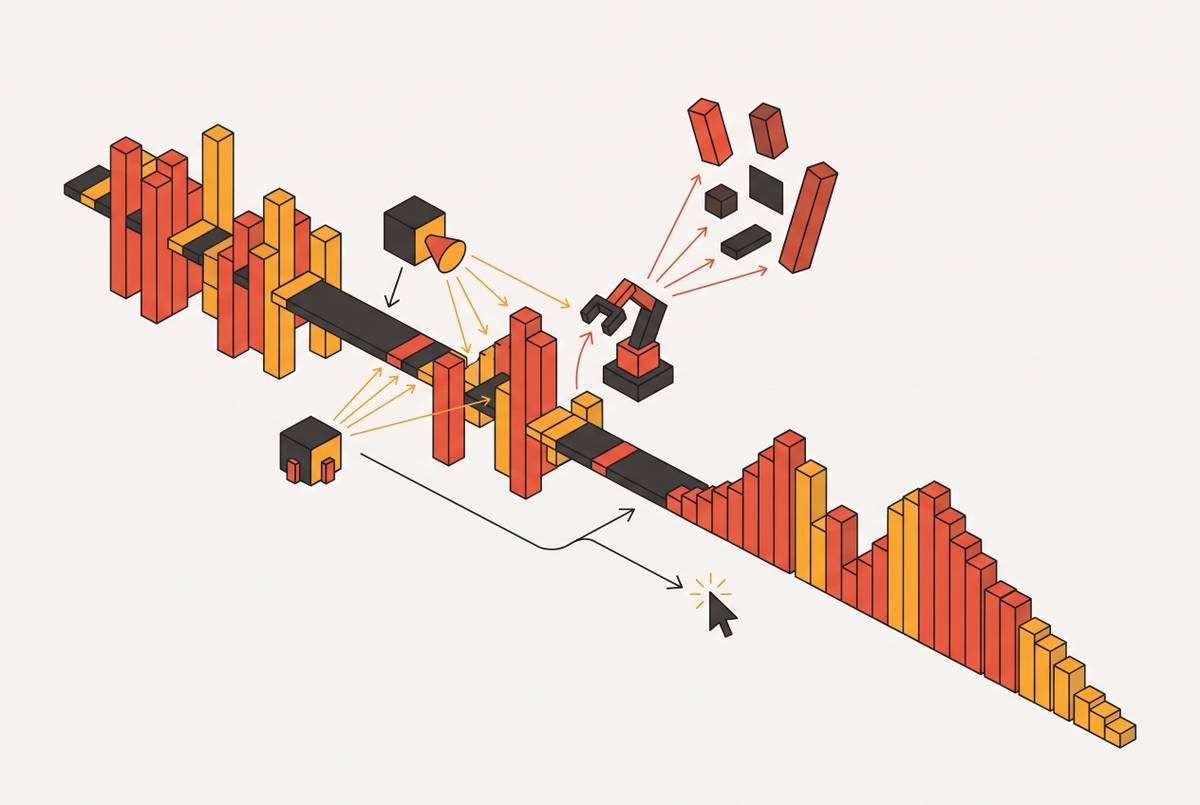
How Autonomous AI Video Editors Model a Human Editor's Judgment Not Just Their Shortcuts
AI can automate editing's mechanics, but intent still needs a human.
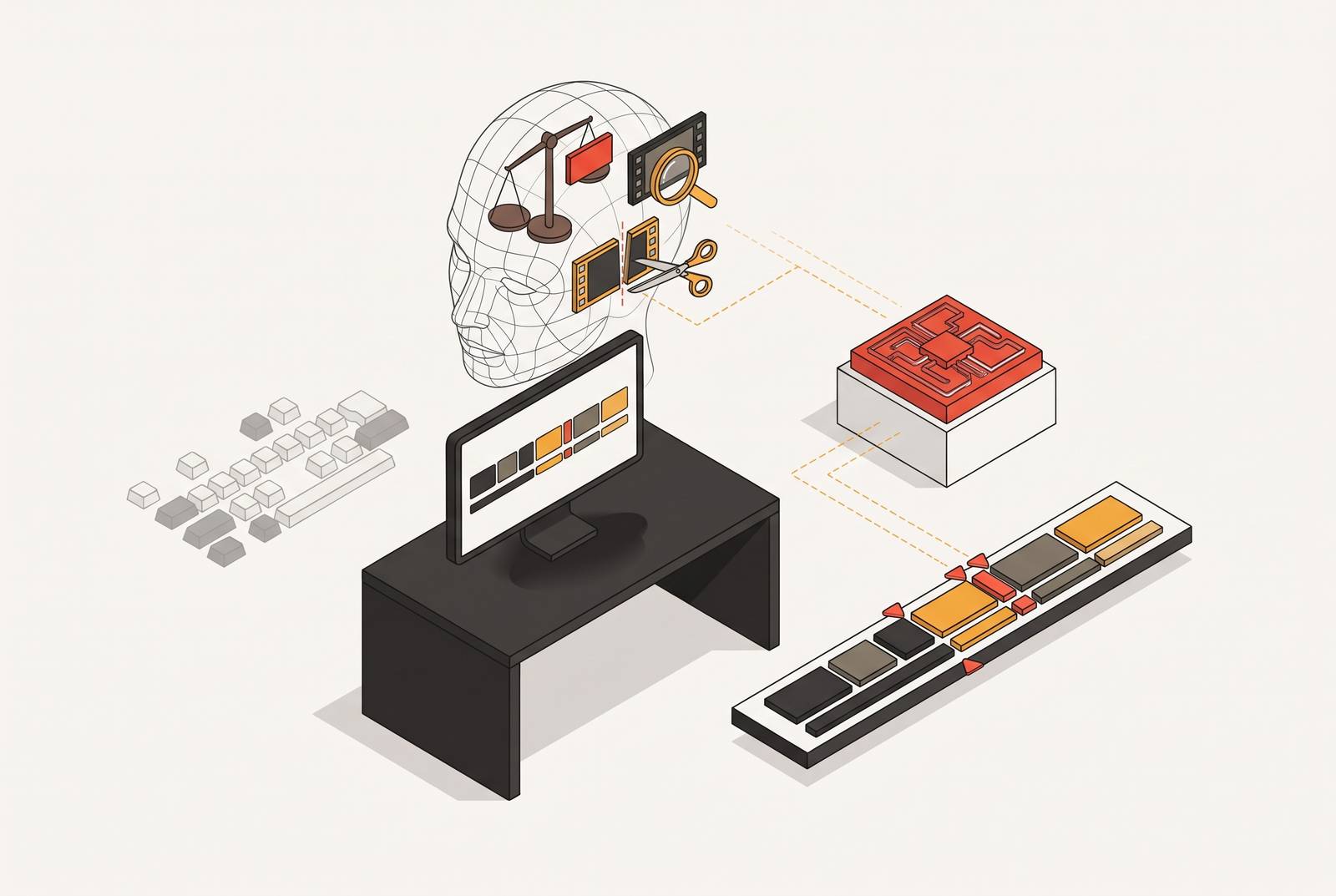
Agentic video editing can automate cuts, captions, reframing, and rough-cut assembly without manual timeline work. It is learning to use speech, sound, and visual signals to make cuts. But editing videos with AI still requires human direction, because recognizing a usable cut is not the same as knowing what the video should say.
Why the "AI handles mechanics, humans handle judgment" split is not as clean as it sounds
AI handles transcription, silence removal, rough cuts, and reframing, while people handle story structure, take selection, and emotional pacing. That arrangement saves human attention for choices where a mistake can change the meaning of the piece. It is a sensible starting point for understanding the division of work.
The same task can call for different kinds of thinking. Removing silence can cut dead air or lose the pause that makes an answer feel honest. Choosing a camera angle can follow the active speaker or help tell the larger story. Evaluating AI requires distinguishing reproduction of an editor’s usual output from modeling the principle behind the choice.
What editorial judgment actually consists of, broken into its component operations
Editorial judgment has at least three parts: rhythm, coherence, and intent. Rhythm determines precisely where a cut lands. Two or three frames before or after a natural boundary can make a moment arrive or merely pass. A cut can be tidy and still feel wrong. That is why cutting at the end of a sentence is a useful rule, but not a complete account of timing.
Coherence asks whether the sequence accurately represents what happened and what the speaker meant. A caption that misstates a name fails this test even if its styling is immaculate. So does an assembly that changes the meaning of an answer or conflicts with what a brand has committed to. Accuracy includes being legally and ethically accountable, which a tool cannot do for someone else.
Intent determines why the video exists, who it serves, and what it should make someone feel. A brief sets that out before anyone starts choosing shots. The footage alone cannot provide the whole answer. Average pacing and common transitions may make an edit look right without giving this audience what it needs. Of the three operations, rhythm is the most rule-shaped, coherence sits in the middle, and intent is the least available for automation.
Where AI is genuinely modeling principles, not just copying outputs
In transcription-based editing, AI works with the semantic content of speech so an editor can choose and piece together what was said through text. This can reclaim a substantial portion of raw runtime with minimal cleanup. The distinction is narrow but real. Working with what was said is more useful than merely reproducing the visible shape of someone else’s edit.
Scene and shot detection make a related advance. AI can identify scene boundaries, shot types, camera motion, and compositional information that an editor would use to make decisions. That provides a usable first-pass edit. Knowing who is speaking answers one editorial question without pretending to answer all of them.
Silence and filler removal work the same way, using acoustic signals. The system detects silence rather than merely guessing where editors usually cut. The signal itself supplies a check on the operation. Across these tasks, the useful combination is a rule-shaped problem, measurable evidence, and a result that can be checked against that evidence. The system follows a principle within a limited task, though finding a pause still does not tell it whether to keep that pause in the final video.
Where AI is still copying outputs rather than understanding principles
Story discovery exposes the largest gap between processing footage and understanding its purpose. No current tool can reliably sift several hours of footage and identify the buried interview answer that should become the emotional spine of the whole piece. An engaging moment is not necessarily the organizing idea. Finding the spine means deciding what everything else is there to support.
AI can flag technical failures such as focus drift or an audio drop, but technically identical takes can differ in energy, authenticity, and emotional connection. Those differences are often the reason to choose one. Punchy captions, fast cuts, and trending template energy can mimic familiar success while working against a brand whose identity is understated, cinematic, or simply specific.
Emotional pacing requires another change of scale. A sequence can make sense cut by cut and still feel flat across its full duration because the individual choices do not build an arc. Continuity can fail more visibly through mismatched eye lines or screen direction. These are film-grammar errors. A polished caption cannot persuade two shots to look in the same direction.
Comedy is especially unforgiving of imprecise timing. AI can cut at easy points and miss the few frames of hold that let a joke land. The awkward pause may be the entire joke. Story discovery, take selection, brand voice, emotional pacing, continuity, and comic timing therefore form useful diagnostic categories. Each reveals a gap between recognizing signals associated with a quality and understanding how to create that quality in context.
Why "AI-first, human-final" is a workflow principle, not just a platitude
An AI-first workflow should begin with an editorial brief that specifies the approved script, required shots, prohibited footage, and exact wording for key claims. Select ranges and required quotes give retrieval and assembly a defined target. A folder of clips does not provide that direction.
Once there is a rough cut, the reviewer does more of the directing. Specific natural-language notes can approve, reject, or redirect decisions, sparing the reviewer a frame-by-frame rebuild. That approach still needs access to the original clips, transcript, timeline, and manual overrides. Otherwise, the review process has nowhere useful to go. An opaque export turns a correctable editorial choice into a reason to start over.
Buyers asking which AI video editor can make cuts and pacing decisions on its own should compare tools by task. Speaker-driven multicam editing suits a first pass based on who is talking. Transcription-based editing suits spoken material that needs selection and trimming, while AI-native recording suits product demos, onboarding, and internal updates that need captions, silence removal, and formatting in-session. These are different jobs. The best fit depends on which decisions can follow measurable signals and which need the brief’s context.
For teams producing screen recordings and async video at volume, this arrangement can collapse the separate “record then edit” stages. The tool does the mechanical work during recording, and the person shifts from timeline work to exercising judgment when reviewing the video. Templates remain useful starting points. Accepting every default is how distinct work ends up wearing the same conference lanyard. The human pass should check that the tool’s style fits the piece as well as that the export worked.
What the strongest objection to this framework reveals about where AI editing is actually heading
The strongest objection is that AI already does more than detect speech and trim silence. AI-assisted story analysis can compare an edit with patterns that have worked in its genre, flag parts where viewers may lose interest, suggest B-roll based on how it makes people feel, and model how different groups of viewers might respond. Those operations approach the territory usually reserved for judgment, so a framework that dismisses them as glorified button-pushing would be too convenient.
The concession strengthens the distinction rather than erasing it. These capabilities model relationships between editorial choices and likely responses, which is closer to applying a principle than copying a transition. But they still aim for a result based on what has worked before. Prediction is not the same as purpose. Knowing what has worked for similar content does not establish what this audience needs from this piece.
AI optimizes probability, and a predicted engagement advantage cannot decide why the work exists. If those forecasts become the sole authority, adequacy becomes the destination. That is different from using them to test a human direction, where a suggestion can be accepted or rejected against a purpose already chosen.
As AI handles more complex choices, human direction can move from executing individual cuts toward steering and evaluating the edit as it develops. The next frontier is interactive systems that apply AI execution to human direction in real time.
What editors and non-editors should actually invest in, given all of the above
For professional editors, the investment is editing grammar, including pacing, story structure, shot selection, and sound. Learn it not just to execute the work manually, but to explain what an AI-generated sequence needs and judge whether the revision works. “Make it better” gives almost no direction. Knowing why a cut fails helps an editor write a note that can be acted on, and that knowledge matters more as the work gets easier to do.
For teams making product demos, onboarding videos, and internal updates, effort belongs in the brief and the review pass. The brief should say who the video is for, what it should do, and which words must stay exactly as written. The review should check whether the result is accurate, makes sense, is on-brand, and is worth releasing. Clean formatting is only one part of that test. A product manager can produce a captioned, well-formatted demo without touching a timeline, but still has to decide what the demo should explain.
Transcription, caption sync and styling, silence and filler removal, rough-cut assembly from a brief, aspect-ratio reframing, and batch operations can go to AI without close supervision of every operation. Release review still belongs to a person. Subtle take selection, story structure where the spine remains unidentified, continuity review, and brand-voice calibration should remain human decisions at every pass.
For non-editors, this is permission to spend less time learning how to move clips and more time learning what makes a sequence work. For editors, it expands the role from timeline operator to creative director of an AI pipeline. Neither role requires resisting automation or granting it unchecked authority. The scarce skill is knowing why something works, especially when the tool can make almost any choice look finished.